
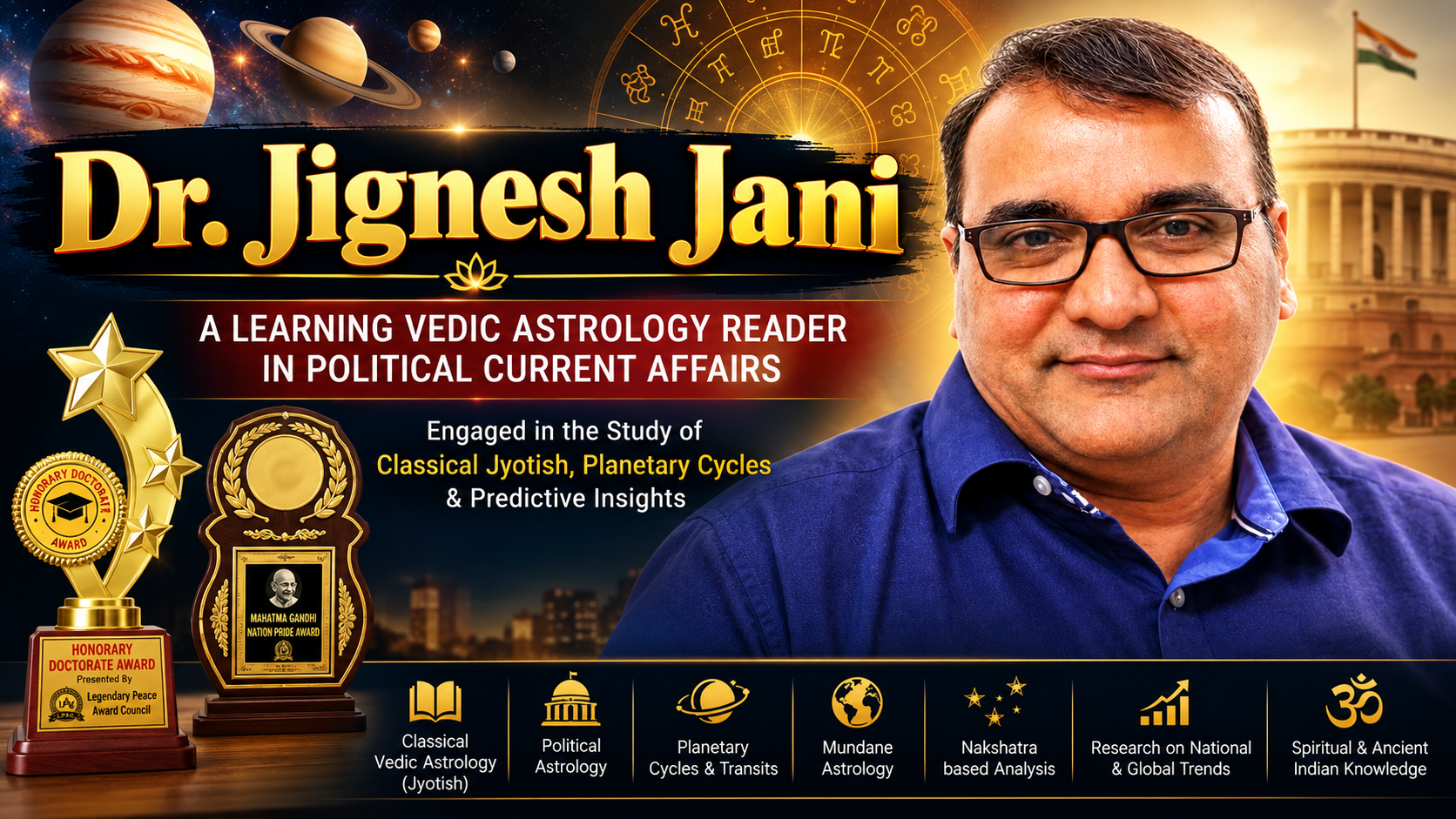
Jignesh Jani Says Leadership Decisions Will Shape the Future Beyond Astrological Interpretations
Ahmedabad | July 10, 2026: Vedic astrology researcher Jignesh Jani has emphasized that while traditional Vedic astrology offers symbolic interpretations of planetary cycles, the future of global affairs will ultimately be determined by the decisions of governments, policymakers, and international institutions. Sharing his observations on the current geopolitical environment, Jani reiterated that astrology should not be viewed as a scientifically established method for predicting specific world events.
According to Jani, Vedic astrology has historically been used to interpret planetary movements as symbolic reflections of collective human experiences and broader historical cycles. He explained that many practitioners currently associate the Mars–Rahu conjunction, traditionally known as Angarak Yoga, with heightened strategic activity, decisive leadership, and increased geopolitical attention. Likewise, the Saturn–Neptune alignment is often interpreted as representing institutional transformation, policy evolution, and shifts in international relationships.
Jani noted that these traditional interpretations can encourage reflection on changing global circumstances but should never be mistaken for certainty regarding political decisions, military actions, or diplomatic outcomes. He stressed that international developments are influenced by practical factors such as governance, economic policies, security considerations, technological progress, and cooperation among nations.
Highlighting Jupiter’s role in Vedic astrology, Jani explained that the planet symbolizes wisdom, ethics, justice, education, and diplomacy. Many astrologers view Jupiter as representing balanced leadership, constructive dialogue, and peaceful conflict resolution during periods of uncertainty.
“Planetary alignments may symbolize themes of transformation, but they do not determine history,” Jani said. “The future depends on the choices made by world leaders, governments, international organizations, and societies working together to resolve challenges through dialogue and cooperation.”
Jani encouraged readers to distinguish between symbolic astrological interpretations and evidence-based geopolitical analysis. He believes that appreciating traditional knowledge while relying on factual information allows for a more balanced understanding of complex international issues.
Concluding his remarks, Jani expressed optimism that responsible leadership, diplomatic engagement, and international collaboration will continue to guide nations through current global challenges. He said that peaceful negotiations, mutual respect, and informed decision-making remain essential for building long-term stability, economic prosperity, and a secure future for the global community.