Satyabhama Majhi: Exploring a Multidisciplinary Language of Contemporary Art
Contemporary art increasingly moves beyond fixed categories. An artist may work with painting one day, photography or installation the next, and later create a large-scale public artwork. For Satyabhama Majhi, this freedom to work across different forms has become an important part of her artistic identity.
Based in Bhubaneswar, Odisha, Majhi is a contemporary visual artist, curator, social activist and community art practitioner whose practice includes painting, sculpture, installation art, photography, mixed media, public art and community-based art. Her multidisciplinary approach allows her to explore people, places, cultural memory, ecology and social change through different visual forms.
Rather than treating each medium as completely separate, her practice connects them through recurring ideas and observations.
A Practice Without Rigid Boundaries
Majhi’s artistic career demonstrates an openness toward experimentation.
Painting remains an important part of her work, but she has also explored sculpture, installation, photography and mixed media. Her involvement in public art and community-based projects further expands the meaning of her practice.
This variety is significant in contemporary art because different subjects can require different forms of expression.
A personal observation may develop into a painting.
A community experience may lead to a participatory project.
A cultural idea may become an installation.
A public space may provide the setting for a mural.
The medium therefore becomes part of the way an idea is communicated.
Painting as a Foundation
Although Majhi works across disciplines, painting continues to occupy an important place in her artistic vocabulary.
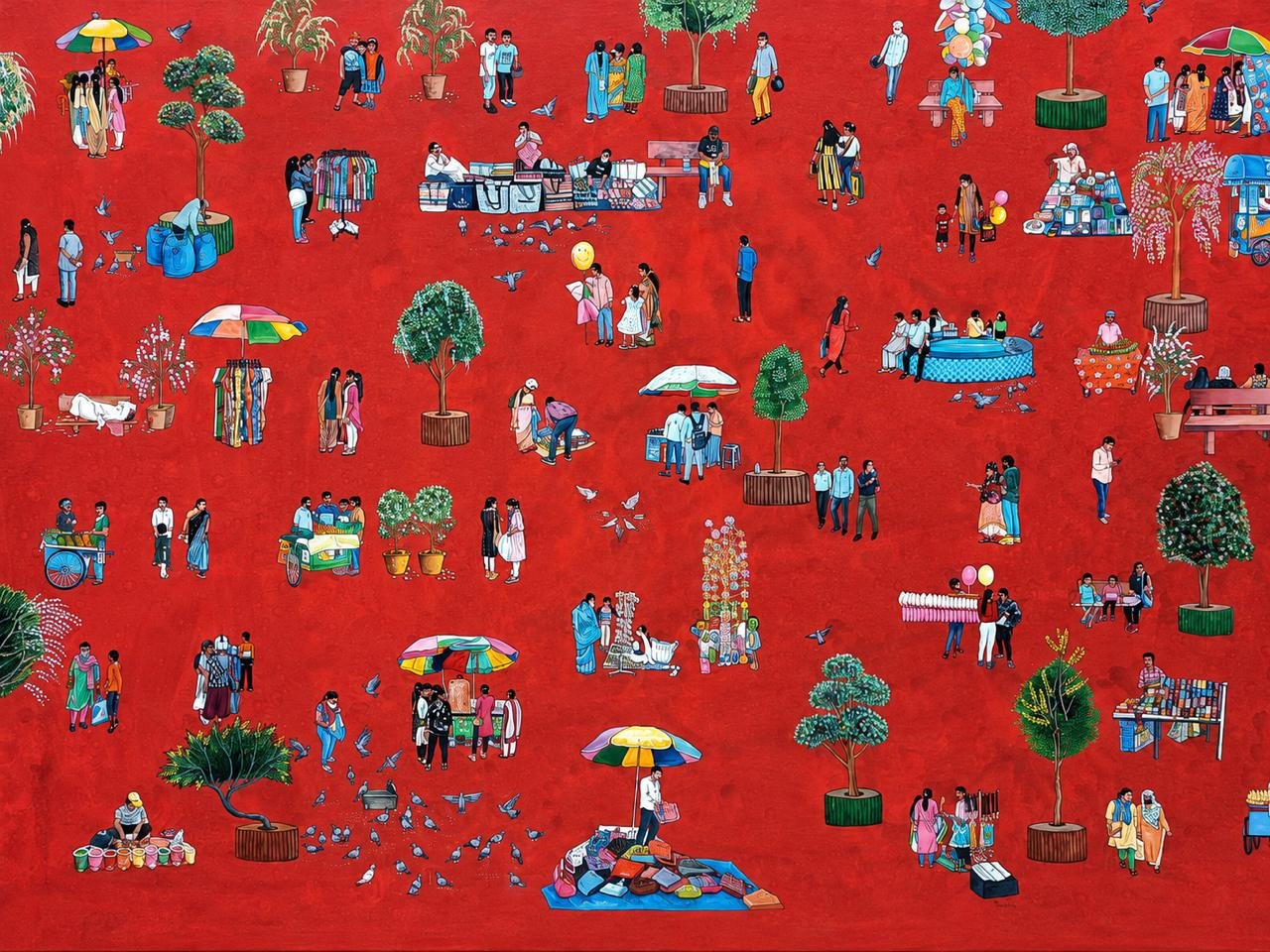
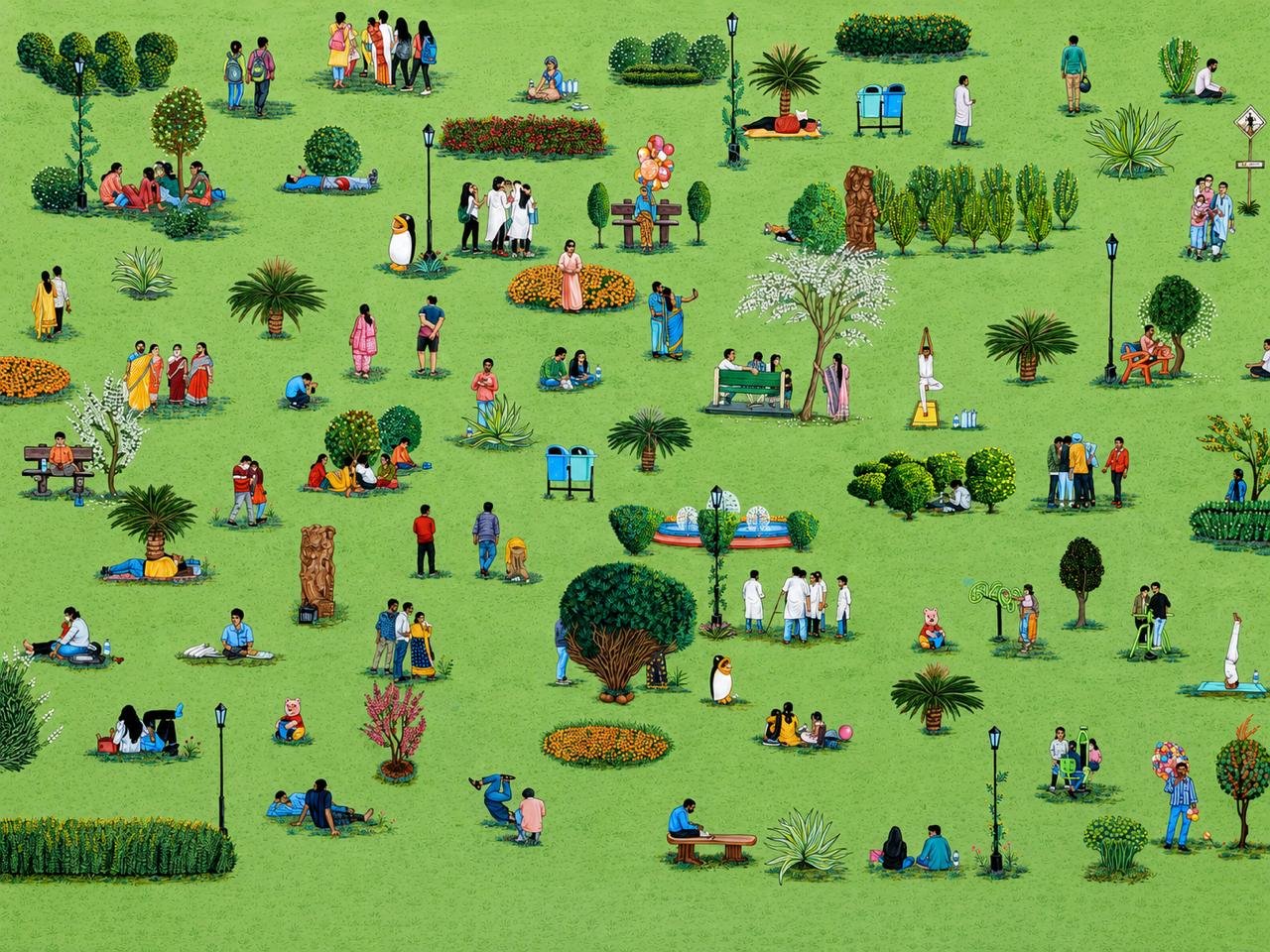
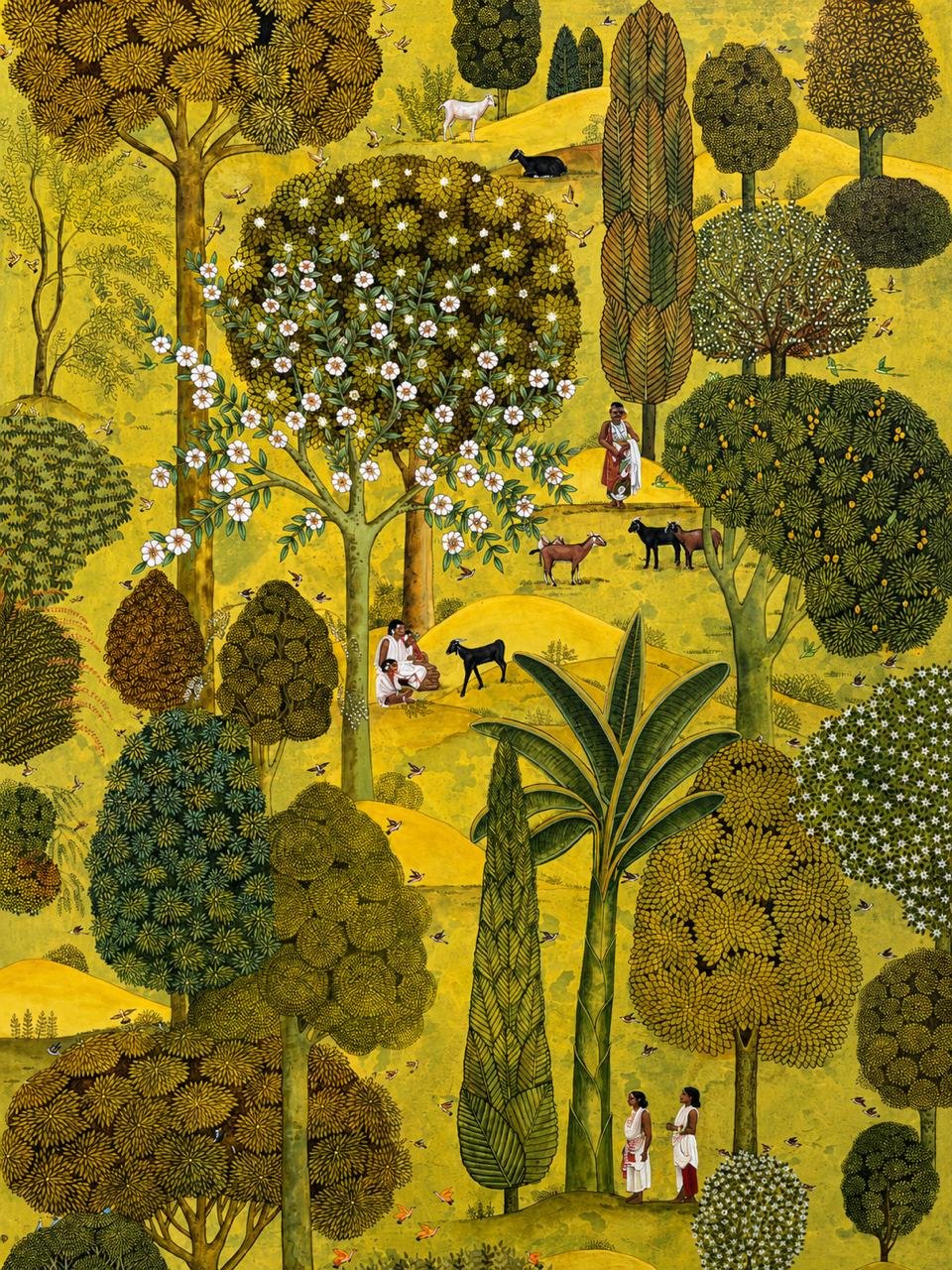
Her paintings frequently include people, animals, vegetation, vendors, architecture and elements of everyday environments.
These subjects allow her to explore collective experiences rather than focusing exclusively on individual portraiture.
Figures can represent communities and shared activities. Animals and plants can suggest relationships between people and nature. Architectural fragments can evoke changing urban environments.
Through these combinations, painting becomes a way of observing society.
A Narrative Approach to Images
Majhi’s visual language often contains a narrative quality.
Her paintings can suggest activities and relationships without necessarily presenting a single linear story.
People may be walking, selling, waiting, celebrating, resting or interacting.
These actions create a sense of movement and everyday life.
The viewer is invited to observe the relationships between different elements of the composition.
Such a narrative approach allows an artwork to communicate atmosphere and social experience without becoming a literal documentary record.
Figures, Animals and Vegetation
The repeated presence of figures, animals and plants is particularly significant.
These elements establish connections between human activity and the environment.
In an urban context, they can reflect the coexistence of people, animals and vegetation within changing neighbourhoods.
In relation to Majhi’s engagement with Niyamgiri, natural imagery can also carry associations with landscape, ecology and indigenous life.
The same broad visual vocabulary can therefore operate across different environments.
Geometry and Visual Structure
Alongside figurative elements, Majhi incorporates geometric forms into her work.
Triangular structures are particularly notable in works influenced by her engagement with Dongaria Kondh visual culture and Niyamgiri.
The triangle can suggest the shape of the surrounding hills while also creating a strong structural element within the composition.
Geometry provides order.
Figures, plants and animals can exist within a more organised visual framework.
This combination of organic and geometric forms creates a distinctive tension within the artwork.
Mixed Media and Experimentation
Majhi’s mixed-media works demonstrate another dimension of her artistic approach.
Works on paper from 2021–22 incorporate people, animals, plants, domestic environments and triangular structures.
Mixed media provides opportunities to combine different textures, marks and materials.
Instead of relying entirely on one traditional technique, the artist can build an image through layers.
This approach is particularly compatible with her interest in combining different forms of knowledge and visual experience.
Material as Meaning
Material choice can influence how an artwork is understood.
Majhi’s experimentation with natural pigments associated with the Niyamgiri region provides an important example.
Materials including charcoal, turmeric, geru soil, chalk stone and brown stone can be processed into pigments and incorporated into artistic work.
The use of such materials establishes a direct relationship between artwork and environment.
The material is not simply a technical ingredient.
It can also carry associations with landscape, cultural practice and memory.
From Image to Installation
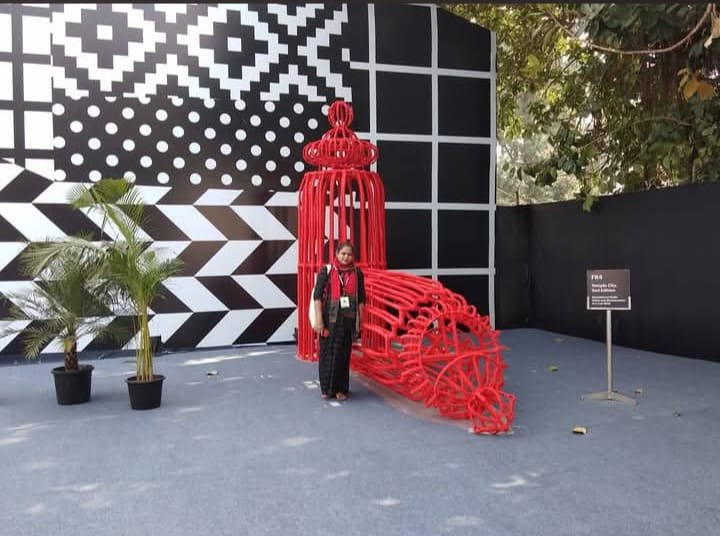
Installation art allows an artist to move beyond the boundaries of a two-dimensional surface.
Instead of presenting an image on a canvas, the artist can use space, objects, materials and physical arrangement to create an experience.
Majhi’s multidisciplinary practice includes installation art, allowing her artistic ideas to operate through spatial relationships.
This is particularly relevant to themes such as community, environment and place, because these subjects are themselves connected with physical spaces.
Photography and Observation
Photography offers another way of recording and examining reality.
For an artist interested in people, communities and changing environments, photography can support close observation.
It can capture details of everyday surroundings that may later influence other forms of artistic expression.
Photography can also function as a bridge between documentation and interpretation.
The camera records a moment, while the artist decides how that moment is understood within a broader creative practice.
Public Art as an Expanded Medium
Majhi’s public-art practice takes multidisciplinary thinking into shared spaces.
She has participated in murals and public-art interventions in Cuttack and Bhubaneswar.
Her work has also been associated with major sporting and cultural events, including the Men’s FIH Hockey World Cup and Asian athletics events.
Public art changes the scale and context of artistic communication.
A gallery artwork may be viewed by visitors who deliberately enter an exhibition.
A mural is encountered by people during everyday movement through a city.
The audience becomes much broader and more diverse.
Art in Everyday Environments
Public art also changes the relationship between artwork and place.
A wall, street or neighbourhood can become part of the artistic experience.
The artwork interacts with architecture, movement, light and the people who pass by.
For an artist whose practice is concerned with community and everyday life, this setting is especially meaningful.
Art no longer exists separately from daily experience.
It becomes part of the environment itself.
Community Art and Participation
Majhi’s multidisciplinary approach also extends to community-based practice.
She has worked with villages, schools, tribal communities, urban neighbourhoods and educational groups.
Such projects require methods that can adapt to different people and circumstances.
The artist may act as a facilitator, observer, educator or collaborator rather than only as an individual creator.
This flexibility is one reason multidisciplinary practice can be particularly effective in community settings.
Working with Children
Majhi’s approximately 15 years of engagement with children and educational communities further demonstrate this flexibility.
Her creative-learning initiatives encourage children to draw from observation and personal experience.
Instead of concentrating only on technical imitation, such activities can involve household life, nature, festivals, animals, journeys and memories.
The resulting process treats creativity as a form of communication.
It also connects artistic practice with education.
Traditional Knowledge in Contemporary Forms
Majhi’s multidisciplinary work is closely connected with her academic background in Traditional Art.
Her engagement with indigenous visual traditions and the Dongaria Kondh community has provided another source of artistic knowledge.
However, these influences do not remain confined to traditional formats.
They can appear through contemporary painting, mixed media, public art and conceptual projects.
This demonstrates how cultural knowledge can move between different artistic forms.
The National Scale of Collaboration
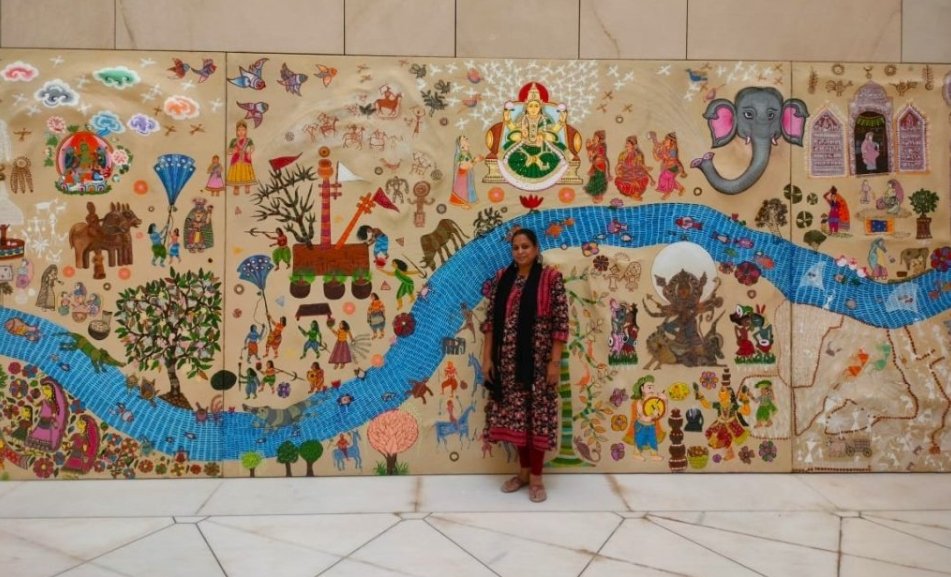
Her participation in People’s Wall – Jan, Janani and Janmabhumi in 2023 provides an important example of this expanded approach.
Majhi served as a Co-Sutradhar and creative contributor to the participatory project created for the New Parliament House through the Lalit Kala Akademi, New Delhi.
The project involved women artists and artisans from different regions of India.
Its collaborative structure brought diverse regional artistic traditions into a contemporary national public-art setting.
Art, Ecology and Society
Across these different media, several concerns remain consistent.
Majhi’s practice repeatedly examines the relationship between people and their environments.
Ecology, cultural memory, indigenous knowledge, urban transformation and community participation appear in different forms.
The medium may change, but the underlying questions remain connected.
This provides coherence to an otherwise diverse body of work.
The Value of Experimentation
Working across media can also prevent artistic practice from becoming predictable.
Each medium creates different possibilities.
Painting allows colour and composition to dominate.
Photography captures moments and details.
Sculpture introduces physical form.
Installation creates spatial experience.
Public art changes scale and audience.
Community projects introduce participation.
Majhi’s career demonstrates how these possibilities can complement one another.
An Artist Between Studio and Society
The multidisciplinary character of Majhi’s work also reflects a broader understanding of what a contemporary artist can be.
She is not confined to the studio.
Her activities include exhibitions, residencies, workshops, public-art interventions, community projects and collaborative initiatives.
She has also undertaken curatorial and educational activities.
This creates an artistic practice that moves between individual creativity and collective experience.
Recognition and Artistic Development
Majhi’s multidisciplinary career has received recognition through institutional platforms.
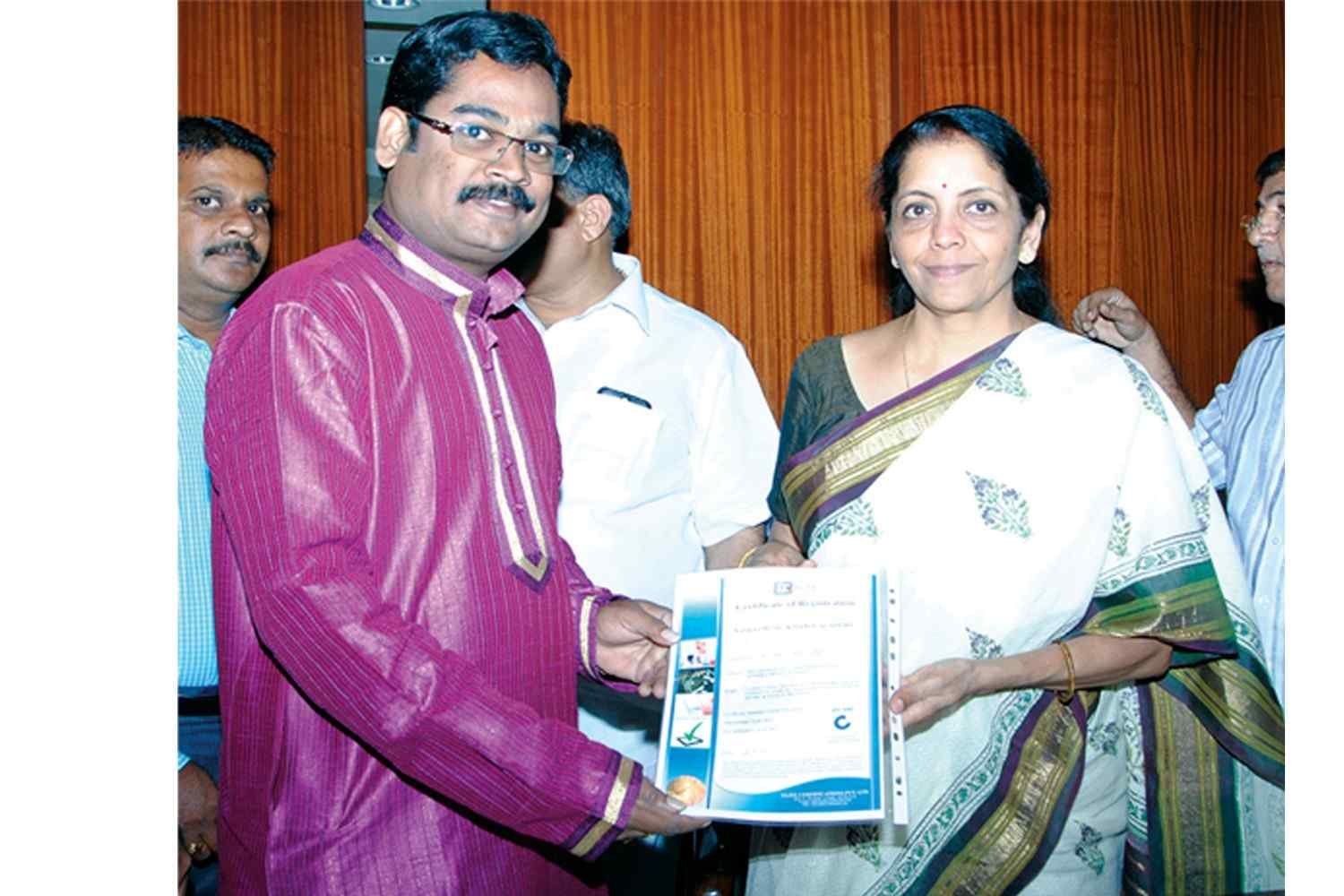
She received the National Lalit Kala Akademi, New Delhi Scholarship for 2009–2010 and the Odisha Lalit Kala Akademi State Award in 2012.
Her exhibitions, residencies and artistic engagements have included platforms such as Bharat Bhavan, Nature Morte, Lalit Kala Akademi, Odisha Lalit Kala Akademi, Bhubaneswar Art Trail and Gram Art Project.
These opportunities have allowed different aspects of her practice to develop across institutional and community settings.
A Connected Artistic Vocabulary
Despite working across many forms, Majhi’s art can be understood through a connected vocabulary.
People.
Landscape.
Memory.
Community.
Nature.
Cultural traditions.
Urban transformation.
These themes provide continuity between her paintings, mixed-media works, public art and community initiatives.
The result is not simply a collection of different artistic experiments.
It is a multidisciplinary practice connected by a consistent interest in human experience and place.
Conclusion
Satyabhama Majhi’s artistic journey demonstrates the possibilities of working beyond conventional boundaries.
Her practice brings together painting, sculpture, installation, photography, mixed media, public art and community-based work.
Each medium provides a different way of examining the subjects that remain important throughout her career: people, communities, landscapes, cultural memory, ecology and social change.
Her use of natural pigments and indigenous visual references demonstrates how traditional knowledge can enter contemporary artistic forms. Her public-art projects show how artwork can become part of everyday environments. Her community and educational initiatives demonstrate how art can become participatory.
This multidisciplinary approach allows Majhi to move between the studio, the gallery, the classroom, the village and the public street.
Ultimately, her work suggests that contemporary art does not have to be defined by a single medium.
It can be a continuous process of observing, experimenting, collaborating and responding to the world.
For Satyabhama Majhi, that process has created an artistic language in which different media come together to explore the complex relationships between people, culture, environment and contemporary life.